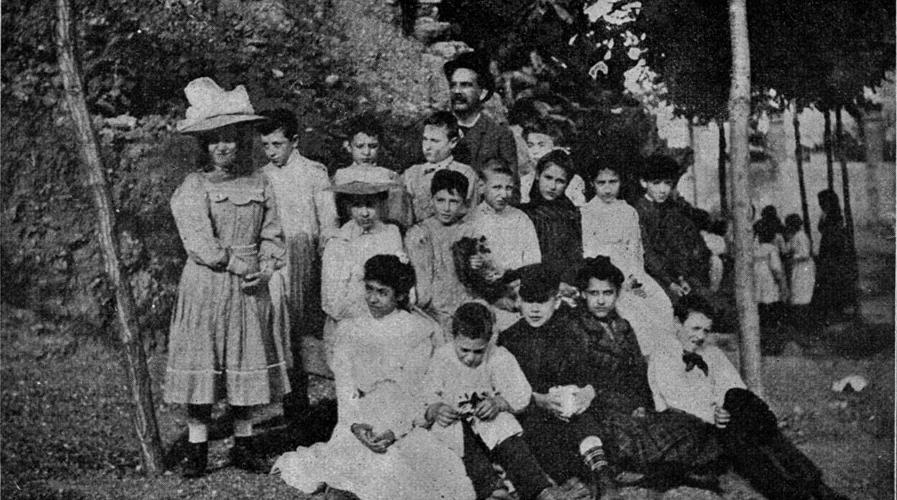
"Modern School" pupils in Spain enjoying a day out, early twentieth century (Fundación Ferrer i Guàrdia)
Anarchism and Childhood: Challenging ‘Adult-Centric’ Narratives of Radical History
By Dr. Nathaniel Andrews
October 27, 2026
In the past decade, children have been at the forefront of international climate strikes (through Fridays for Future); gun control campaigns (such as Never Again MSD); and anti-racist activism (for instance, by attending and organising BLM demonstrations).1 However, as literary scholar Marah Gubar notes, assumptions about ‘childish incompetence’ often lead us to forget how, through both their political organising and their artwork, children help to create a fairer society.2 In fact, as Gubar stresses, ‘we must also remember the ways in which children…have already challenged the status quo’ in earlier periods of history.3 Put simply, child activism is not new; it forms part of a long – albeit frequently disregarded – tradition in radical politics.
With this in mind, my current book project, tentatively titled Anarchist Childhoods: A Children’s History of Anarchism in Buenos Aires and New York, explores the history of ‘anarchist’ children; of those kids who grew up in close proximity to (and even participated in) anarchist militancy in these two cities, in the late nineteenth and early twentieth centuries. Using ‘anarchism’ as a framework through which to explore ‘political’ childhoods of the past helps to challenge adult-centric narratives of radical history more broadly, while also providing essential context to today’s child activists. The aim of my current work is twofold: 1.) to offer a more nuanced understanding of what we mean by ‘political activism’ and 2.) to inform understandings of and approaches to child activism in the present.
But why focus on anarchism, rather than, say, communism or socialism? Partly, this is simply because anarchism happens to lie within my particular field of expertise. I have spent a decade immersed in the world of Spanish, Argentine, and (latterly) North American anarchist activists, and – while investigating seemingly unrelated topics – I have come across, time and again, examples of children who grew up in anarchist households. It is also worth noting that, in the case of anarchism, we are talking about an ideology that seeks to completely transform society: from the power dynamic between capital and labour to gender relations; from what we eat and drink to how we use our leisure time; and from how we relate to animals and the natural world to how, crucially, we educate and raise our children. Theoretically speaking, anarchists are not just anti-capitalist, but anti-statist and, on a fundamental level, anti-hierarchical. Historically, they have been opposed to ‘essentialized representations of human nature’ and, consequently, they have sought to create ‘new social forms’.4 Moreover, as I explore in my forthcoming book Everyday Anarchism, one of the core tenets of anarchism is the practice of ‘prefiguration’; of ‘prefiguring’ a future utopian world here in the present, through one’s everyday practices.5 In this context, it is not surprising that, in addition to discussions on sexuality, ‘free love’, and the family, the theme of education – and, more generally, childhood itself – ran through a great deal of anarchist writing, from the early nineteenth century right the way through to the end of the period that I study. For his part, the late historian Paul Avrich even suggested that anarchists ‘were perhaps the first educational theorists to defend the rights of children, whom they regarded as fundamentally equal to adults, with the same need for freedom and dignity’.6
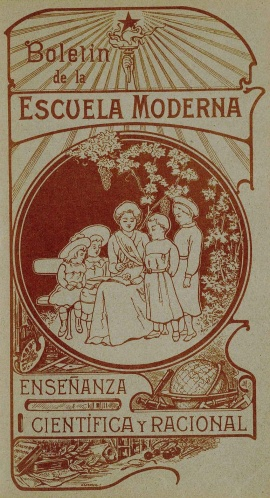
Cover of the official Bulletin of the Barcelona Modern School (Fundació Ferrer i Guàrdia).
To take one example, throughout his life, the English political philosopher William Godwin (1756–1836) – often cited as the first promoter of anarchism, at least in the English language – directed a lot of his attention to children’s education. To this end, he produced a number of publications explicitly for child readers, including through his ‘Juvenile Library’ publishing house.7 He was deeply critical of traditional pedagogical approaches such as ‘rote learning’ and ‘harsh discipline’; in his view, ‘egalitarian relationships between tutors and children…should be the norm’.8 Writing in 1866, Mikhail Bakunin (1814–1876) – Karl Marx’s staunchest rival in the First International, and another key figure in the history of anarchist thought – put it like this: ‘Children belong neither to their parents nor to society. They belong to themselves and to their own future liberty.’9 For Bakunin, the education of children was the responsibility of the whole community, not just of their parents.10 In like manner, Russian-American anarchist Emma Goldman (1869–1940) – undoubtedly one of the most famous anarchist activists from history – posted the following question in an article in Mother Earth, in April 1906:
Is the child to be considered as an individuality, or as an object to be moulded according to the whims and fancies of those about it? This seems to me to be the most important question to be answered by parents and educators. And whether the child is to grow from within, whether all that craves expression will be permitted to come forth toward the light of day; or whether it is to be kneaded like dough through external forces, depends upon the proper answer to this vital question.11
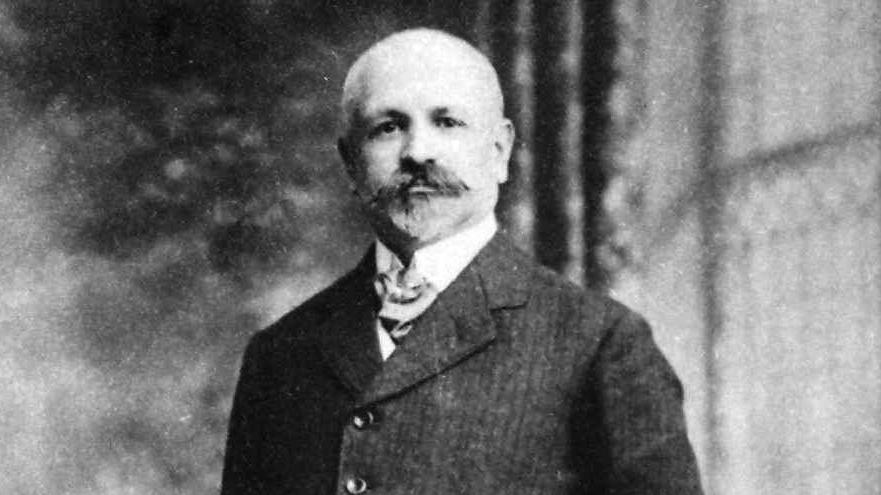
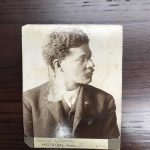
Francisco Ferrier i Guàrdia (1859-1909), founder of the ‘Modern School’ in Barcelona, in 1901 (Fundación Ferrer i Guàrdia).
Yet it was the work of Spanish educator and educational theorist Francisco Ferrer i Guàrdia that left, perhaps, the most enduring impact on classical anarchists’ attitudes towards education and childhood. In 1901, Ferrer founded the ‘Modern School’ in Barcelona, an institution that was unusual in several respects: firstly, it was coeducational; secondly, there were no grades or punishments for pupils; and thirdly, the children who attended this school enjoyed a significant amount of autonomy, for the most part directing their own studies.12 Ferrer’s ‘child-centred pedagogy’ became hugely influential both in and outside Spain, with similar ‘Modern Schools’ emerging in a variety of countries, including the UK, Italy, France, Germany, Czechoslovakia, Poland, Belgium, Brazil, Argentina, the USA, and China, among others.13 Whether or not Ferrer was an anarchist – there are differing views on this in the relevant scholarship, and Ferrer himself rejected the label – many of those with whom Ferrer collaborated were anarchists, and his ideas found fertile ground within anarchist circles.14 As a result, in the early-to-mid twentieth century, many children with anarchist parents – on both sides of the Atlantic – grew up in close proximity to these ideas (I have personally interviewed people in both the US and Argentina who did so, some of whom are now in their nineties). In my hometown of Liverpool, in fact, there once existed a Ferrer-inspired ‘anarchist Sunday school’ (between c. 1908 and 1912), while a particularly famous Modern School survived at Stelton, New Jersey, for almost forty years (from 1915 to 1953).15
So far in my discussion of anarchism and childhood, I have only mentioned the writings and perspectives of adult anarchists (or anarchist sympathizers), but it is, of course, even more important to capture the experiences of the children themselves. Therefore, most of my current research efforts are centred on children’s contributions – both material and discursive – to the anarchist movements under study. For instance, in October of last year, I spent several days consulting the Modern School collection at Rutgers University, which contains hundreds of examples of artwork – such as linocuts – produced by the children of the Stelton Modern School. Nevertheless, as anthropologist Allison James has argued, in trying to ‘give voice’ to children, researchers face several difficulties.16 Firstly, we need to think about authenticity – that is, are we actually representing the experiences of children, or simply the experiences of children as represented by adults?17 Secondly, are we considering a diverse range of children’s experiences?18 And thirdly, are children participating in the research process, too?19 Unfortunately, in the case of historians of childhood, this last point is a bit trickier, for obvious reasons (unlike in anthropology or the social sciences, we are writing about people who might have passed away a very long time ago). However, bearing these points in mind, for this project I am trying to utilize as much source material produced by children as I can, as well as material (such as children’s stories) consumed by children, in order to uncover how children experienced, represented, and participated in anarchist education and anarchist households. In this sense, this project is not merely a study of anarchism and childhood but, ideally, a ‘children’s history of anarchism’, too.
This intervention is important for two main reasons. Firstly, studying anarchist movements through the lens of childhood reveals key insights into the extent to which (and the success with which) anarchist ideals were implemented in the localities mentioned above. After all, child-rearing and children’s education can serve, together, as perhaps the greatest test of anarchist ideas, and of whether we can truly have a functioning society without coercion. Secondly, though childhood studies have focused increasingly on children’s politics, scholars have often studied ‘Capital P’ politics: engagement with institutions ‘led and defined by adults’ and the state.20 Therefore, while exploring childhood is essential to understanding the history of the anarchist project, exploring ‘political’ childhoods through the lens of anarchism – an ideology that rejects ‘Capital P’ politics explicitly – helps to widen our understanding of children’s political activism more generally, by centring on children’s engagement in and experiences of ‘everyday’ politics; that is, political practices that are ‘broader and deeper than formal structures of participation’.21
Dr. Nathaniel Andrews is a historian of everyday life, with a particular focus on protest and resistance in Argentina. He is currently a Simon Research Fellow at the University of Manchester, where he is working on his second book Anarchist Childhoods: A Children’s History of Anarchism in Buenos Aires and New York, 1890-1945. Prior to this, he was a Research Fellow at the University of St Andrews; Senior Editor of British Online Archives; and a Lecturer in Spanish and Latin American Cultural Studies, also at Manchester.
Kata Dozsa, Children as Climate Citizens: A Sociolegal Approach to Public Participation (London: Routledge, 2023), pp. 6–7; Laurie Collier Hillstrom, School Shootings and the Never Again Movement: 21stCentury Turning Points (Santa Barbara: ABC-CLIO, 2019), p. 2; Justin Hemenway, ‘Young Activists Stand up For Justice at Black Lives Matter Protests’, UNICEF USA, 11 September 2020 <<https://www.unicefusa.org/stories/young-activists-stand-justice-black-lives-matter-protests>> [accessed 24/09/2026]; and Ramazana Mwamba, ‘“I Expected 20 People To Come” … The Teenager Who Organised A Massive Black Lives Matter Demonstration in Manchester through Instagram’, Manchester Evening News, 19 June 2020 << https://www.manchestereveningnews.co.uk/news/greater-manchester-news/i-expected-20-people-come-18397086>> [accessed 24/09/2026]. I would like to thank Kiera Vaclavik of Queen Mary, University of London for her suggestions and help developing this project. ↩︎
Nathan Jun, Anarchism and Political Modernity (Continuum International Publishing, 2012), pp. 143 and 146. ↩︎
Ruth Kinna, ‘Utopianism and Prefiguration’, in Political Uses of Utopia: New Marxist, Anarchist, and Radical Democratic Perspectives, ed. by S.D. Chrostowska and James D. Ingram (Columbia University Press, 2016), pp. 198–218 (pp. 198–200) and Nathaniel Andrews, Everyday Anarchism: Prefiguring Utopia in Spain and Argentina, 1890–1930 (University of Illinois Press, 2027). ↩︎
Paul Avrich, The Modern School Movement: Anarchism and Education in the United States (Princeton University Press, 1980), p. 12. ↩︎
Katherine Moore Heleniak, ‘William Mulready (1786–1863), William Godwin (1756–1836) and the Juvenile Library’, The British Art Journal, 20.1 (2019): 8–29 (pp. 8–9). ↩︎
Geoffrey Fidler, ‘The Escuela Moderna Movement of Francisco Ferrer: “Por la Verdad y la Justicia”’, History of Education Quarterly, 25.1–2 (1985): 103–132 (p. 104) and Avrich, p. 33. ↩︎
Bob Holton, ‘Syndicalism and Labour on Merseyside’, in Building the Union: Studies on the Growth of the Workers’ Movement on Merseyside, 1756–1967, ed. by Harold Hiken (Liverpool University Press, 1973), pp. 121–150 (pp. 129–130) and Fidler, p. 115. ↩︎
Allison James, ‘Giving Voice to Children’s Voices: Practices and Problems, Pitfalls and Potentials’, American Anthropologist, 109.2 (2007): 261–272 (p. 262). ↩︎
Kirsi Pauliina Kallio and Jouni Häkli, ‘Are There Politics in Childhood?’, Space and Polity, 15.1 (2011): 21–34 (p. 23). ↩︎
Sophie Hadfield-Hill and Pia Christensen, ‘“I’m Big, You’re Small. I’m Right, You’re Wrong”: The Multiple P/politics of “Being Young” in New Sustainable Communities’, Social & Cultural Geography, 22.6 (2021): 828–848 (p. 828). ↩︎
When archaeologist Maria Sommer and Dion Sommer, Professor Emeritus of Developmental Psychology, set out to study early childhood in ancient Attica, they
While studying early twentieth-century amateur journalism, Elissa Myers came across articles penned by Ernestine Clark Nesbitt and Consuelo Clark Stewart. Although Myers