Dr. Edel Lamb’s newest article, entitled “‘you new worlds may justly make’: Youth, Imagination and World-Building During the English Civil Wars”, dives into the literary oeuvre of Jane Cavendish and Elizabeth Brackley, two sisters growing up in seventeenth-century England. Isolated to their home as a result of the ongoing English Civil War, the two young girls created an alternate reality for themselves in plays and poems, one filled with youthful freedom, romantic courtship, and–crucially–a future after war.
In analyzing Jane and Elizabeth’s works, Lamb recovers a young insight into the challenges of growing up during conflict and the playful coping strategies young women might have used to make sense of their surroundings. She presents a framework for examining young peoples’ creativity and authorship as instrumental tools of understanding human responses to war and peace. Her article appears in 19.2 of the Journal of the History of Childhood and Youth published in June 2026.
To start off, how would you summarize the core argument of your chapter?
This article takes the writings of two sisters – Jane Cavendish and Elizabeth Brackley – during the period of the English civil wars as a case study to argue that creativity offered girls in the past a mode for depicting their experiences, negotiating their emotions, and building communities during periods of conflict. In other words, it reads their writing of poems and drama as a form of resilience in extreme situations. It suggests that by considering their texts in this way, we might begin to trace a longer history of young people’s experiences of conflict and the important roles they play in responding to crisis through storytelling and performance.
In your article, you discuss various parameters that categorize the Cavendish sisters as youth. How do our twenty-first century definitions of youth differ from seventeenth-century definitions amidst a civil war?
I adopt an expansive understanding of what defines these girls as youthful. These sisters are in their late teens and early twenties when they write these texts, but as I note in the article the war’s deferral of the rituals that normally mark a transition into adulthood for early modern girls positions them in what Deanne Williams has termed a ‘protracted’ girlhood (Shakespeare and the Performance of Girlhood, 189). In many ways, I think this maps on to how we define youth now: age in years is only part of that and it varies depending on the legal definitions, institutional and family contexts, and social rituals that define youth differently in the twenty-first century.
Much of my work focuses on how childhood, youth, boyhood, and girlhood are defined by particular early modern contexts and I always situate that within current conceptualisations of these states as performative and culturally constructed and contingent. For my current project on writing by girls, I resist taking a particular age as an endpoint for girlhood, and I think that has parallels now. In an opening seminar for my MA module at Queen’s University Belfast on Shakespearean Childhoods, my students begin by discussing how they define these terms and I am always struck by how they define themselves as young or youthful as students, even though most of them are in their early to mid-twenties.
Could you elaborate on the role that ideas of stagnation and future play for the Cavendish sisters and how this intersects with their youth?
War for these girls results in a prolonged stay in the family home and when the home of this royalist family is occupied by parliamentarian forces they are effectively under house arrest. War then creates a situation in which many elements of normal life are put on hold. This would inevitably place anyone in a state of deferral, but it is particularly significant for young people then, as it would be now. Youth is often a transitional phase of developing identities and looking to the future. What is particularly interesting in the case of the Cavendish sisters, I think, is how writing (and possibly also performing) their own plays offers a way of continuing with what would have been normal in their lives. They are the daughters of the author, William Cavendish. Writing plays and poetry is part of their elite family culture.
I argue that writing during this time of war is one way that they continue family life. It is also a way in which they imaginatively explore what it means to be in this state of stagnation in their drama. The characters of their play, The Concealed Fancies, are girls of similar ages who are also deferred from moving forward in a time of war. The play imagines that the war ends and the characters celebrate that this allows loved ones to return, including suitors for the girls, and lets them move forward with their lives. The way in which the Cavendish sisters represent girlhood during wartime as a tension between stagnation and a desire to move forward in their drama suggests they are extremely sensitive to these competing impulses in their own wartime experience of youth.
This period of stagnation fosters strong sibling bonds. How may we read sisterhood as domestic and female resilience?
Sisterhood is an important element of the Cavendish girls’ wartime experience and their writing. Jane and Elizabeth write the plays together, but they may have written them for their younger sister Frances who is also in the family home. A number of the poems are dedicated to each other, as well as to other family members. Their poetry and plays then are part of shared sibling experience. They also depict groups of siblings in the plays and present their shared modes of surviving the war as they explore the house together, talk together, imagine together. In the context of being in the domestic space during a period of war, these shared activities and representations of sibling bonds are modes of not simply surviving and passing time, but of emotional support and creating community.
Is there any evidence that the sisters performed their plays to and with each other?
We don’t know for sure. Before the war, plays would definitely have been performed in the family home. Girls across elite households often put on performances before and after this period, with various members of the household and even neighbouring households taking part in and watching these performances. So their play is definitely written with these possibilities of performance in mind. But we don’t have evidence that the sisters actually performed the plays they wrote during this period of war. Many scholars have thought about them as a way of passing the time and distracting themselves during this time, and my article develops this by thinking about how if they were performed they worked as a mode of community building for the wider community of Welbeck Abbey. But unfortunately we don’t have evidence to claim that they were definitely performed!
I stumbled upon the concept of “emotional echoing.” How might this concept enrich the field of historical childhood studies?
‘A Critical Conversation on Agency’ in the 2024 issue of JHCY led me to Karen Vallgarda and Katrine Rønsig Larsen’s development of this concept in their analysis of twentieth-century young people’s experiences in contexts of divorce. For me, it resonated with how I was thinking about the ways in which I we might use literary texts by girls for work on the history of childhood and youth. Early modern girls who write are often well-educated and widely read, and as a result the texts they write are always conscious of generic conventions and use common tropes. Thinking about how their use of familiar models – familial, literary, from other media – in their writing can also function as an emotive tool to mediate and echo their emotional experiences offers a way of reading literature by children as an important resource for youth-centred history.
Your primary sources are plays and poems, not diaries. What are the limits of using these creative productions as reflections of the young authors’ lives?
Although I do read the plays and poems via this approach of ‘emotional echoing’ as important sources for thinking about the emotions and experiences of children and young people in the past, I am always conscious of these texts as literature. The poems and plays do relate closely to the lived experiences of the Cavendish sisters in the ways that they are often written directly to family members. But while it is very tempting to align the experiences of the young female characters in the play which is set during a war with the lives of these young authors, the play is fictional. What I do thinks these texts can reveal about the young authors’ lives, however, is how important writing and creativity is to them.
What section from the texts you looked at particularly stuck with you?
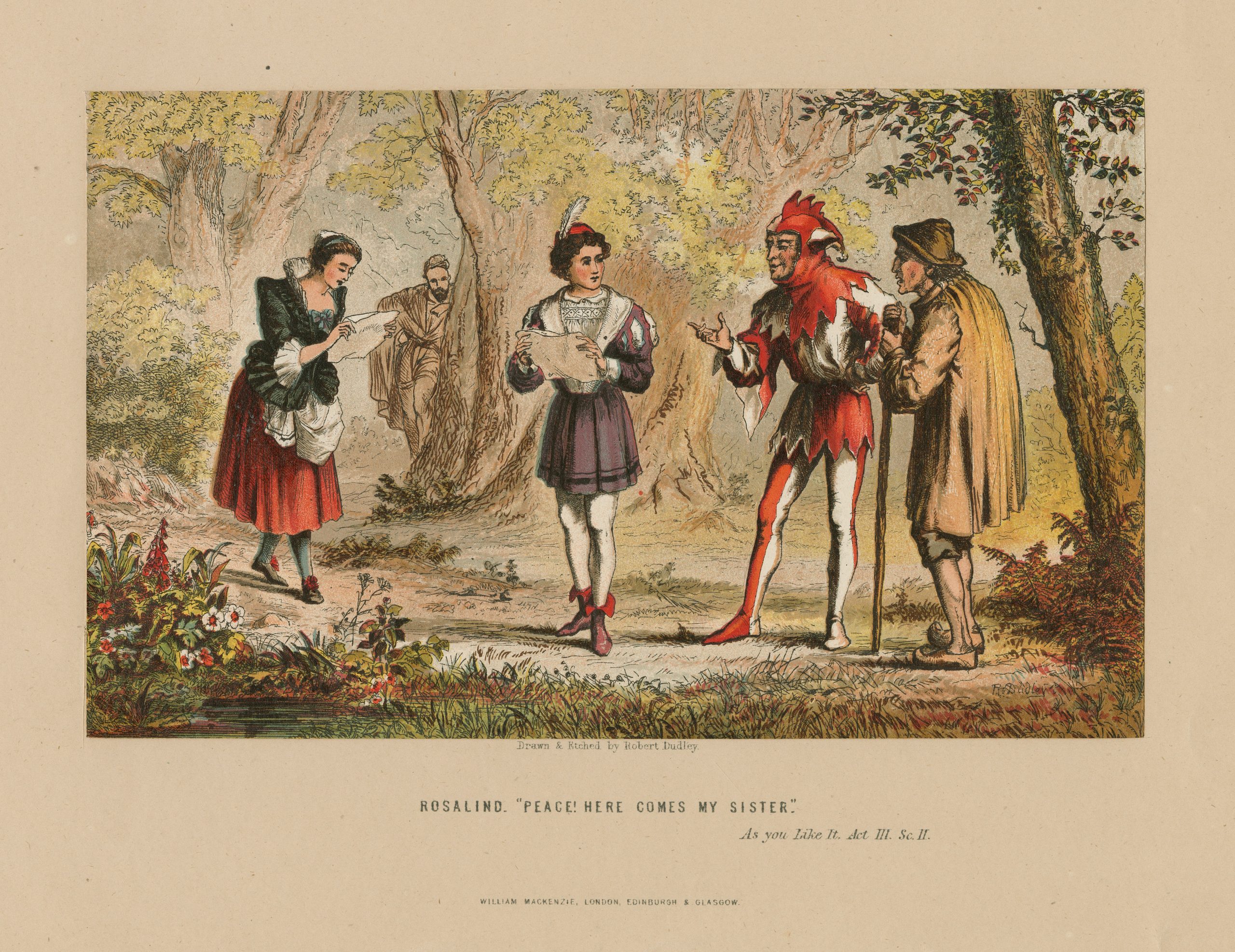
As someone who also works on Shakespeare and early modern performance, I always enjoy self-conscious references to performance in The Concealed Fancies. In addition to the reference to Cleopatra, which I mention in the article, the play echoes elements of As You Like It, in having young women deliver prologues and epilogues, in the depiction of female friendships and the ways in which young women get what they want in romance. When I first read the play these representations of young women and their imaginations were what struck me. But as I thought further about the play in the context of wartime experience, I found the shift from playful ‘fancies’ as a mode of passing the time to one of the young character’s description of what they have experienced as ‘hell’ and ‘darkness’ is what has stayed with me and influenced my interpretation of the texts for this article. A young female character – known only as ‘Sh’ in the text – talks about the two sides to this wartime experience as worlds ‘that imitate the other’. For me, this brief tonal shift in the play – which is primarily a comedy – gives an insight into how the playful fancies in which these girls indulge during this time of crisis does not mean they are oblivious to it or unaffected by it. In fact, it is the juxtaposition of play and grief that gives an insight into the impact of violence on these young characters.
As you were working on your article, did you have similar contexts in mind of girls exhibiting creative and playful resilience in the face of crisis?
I first read the sisters’ play when I was a student, but I re-read it during the Covid lockdowns in the early stages of my larger project on girls’ writing. My children were making up their own games to entertain themselves, and my daughter was writing stories as part of the schoolwork she was being set to do at home and as her own way of passing the time during lockdown. This definitely had an impact on my interpretation of it! Since then I have also been thinking about the Cavendish sisters’ poetry, drama and their possible performance in relation to recent examples of young people’s ways of telling their stories in conflict and post-conflict societies. Works on youth, the arts and peacebuilding has really shaped my approach to reading their texts in this article.
How does this article fit into your current broader research project?
This article is my broader research into girls’ writing. I’m currently finishing a monograph as part of a Leverhulme-funded project which explores girl authorship in the sixteenth and seventeenth centuries. It’s also part of my work on thinking about early modern girls’ writing as part of a broader history of the importance of children and young people’s creativity. I’m currently co-editing a collection with Jennifer Duggan (University of South-Eastern Norway) and Lois Burke (University of Stirling) on girls’ participation in fan practices across time and media. I’m also drawing on this article to think about girls, the arts, and peacebuilding as co-lead of the ‘Arts and Peacebuilding’ network at the Institute for Global Peace, Security and Justice at Queen’s.
To end on a personal note, we’d like to ask you about a few of your favorite things…
- Favorite way of managing notes and/or citations?
I am not a good role model in terms of managing notes and citations! For my research on early modern girls’ writing, my notes are across various notebooks and files. My resolution is to learn how to use some of the great digital options available once I finish my current book!
- Best book in the history of childhood and youth you’ve read in the past year?
One of the many pleasures of this current research project has been reading books in the field of history and childhood and youth. But as an early modernist at heart, I keep re-reading Caroline Bick’s Cognition and Girlhood in Shakespeare’s World: Rethinking Female Adolescence (CUP, 2021). The way in which she reconceptualises girlhood and girls’ cognitive abilities in the period has been crucial to my thinking for this project.
- Favorite childhood book?
I love this question, and always find it impossible to answer! I read a lot as a child, and my favourites for a long time were the Chalet School series and all of the Anne books, especially the ones set during the world wars. When Hitler Stole Pink Rabbit stunned me the first time I read it, and it was another one that I read often. I have obviously been interested in thinking about the relationships between literature, girlhood, and war for a long time!
Edel Lamb is Reader in Renaissance Literature at Queen’s University Belfast. She is the author of two Palgrave monographs – Performing Childhood in the Early Modern Theatre (2009) and Reading Children in Early Modern Culture (2018) – and is currently completing her Leverhulme-funded monograph on writing by early modern girls. She is co-editor, with Lois Burke and
Jennifer Duggan, of Girls’ and Young Women’s Participatory Cultures Across History (forthcoming Routledge). For more information see here.